Solar + Battery + EV: The Ultimate UK & European Home Energy Bundle (2026 Guide)
Published: June 13, 2026 · 12 min read · UK & Europe
Solar panels generate free electricity. A battery stores it for evening use. An electric car runs on it. Together, the three form a "Sun-to-Wheel" energy ecosystem that can save UK households £2,000–£3,500 per year — and virtually eliminate both electricity bills and fuel costs. Here is how to build it in 2026.
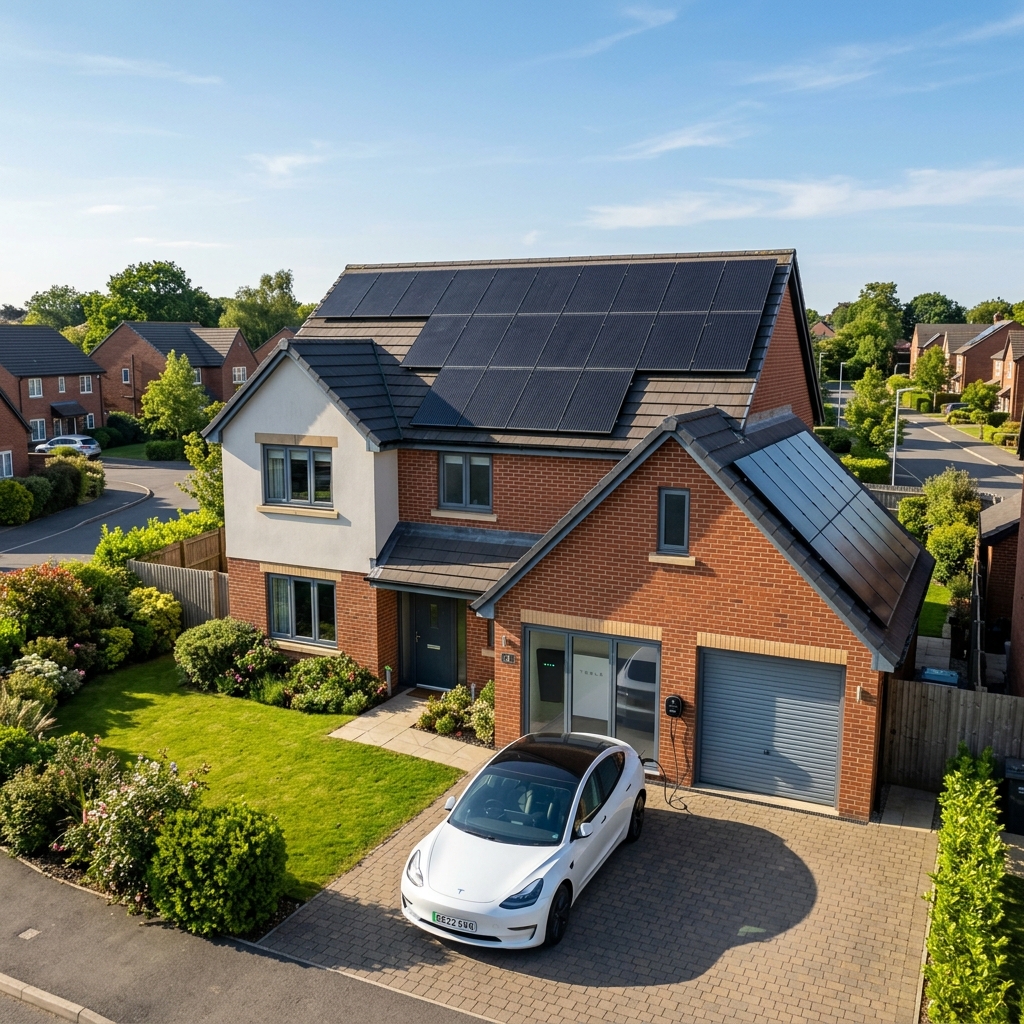
Why the Bundle Is More Powerful Than the Sum of Its Parts
Solar panels, home batteries, and EVs are each valuable on their own. But the reason the combined system is so compelling in 2026 is that the three technologies create a virtuous cycle that magnifies the financial return of each component:
- Solar charges the battery for free during the day, eliminating the need to buy expensive grid electricity in the evening.
- The battery stores solar surplus that would otherwise be exported at a low 4–15p SEG rate, allowing you to use it when electricity costs 28–35p/kWh.
- The EV acts as a secondary battery — on long summer days with surplus solar, you can charge your car for free too, worth 20–40 miles of daily driving.
- V2G / V2H unlocks reverse flow — during evening peak, you can power your home from the car battery, cutting grid imports to near zero in shoulder seasons.
What Does the Full Bundle Cost in 2026?
Installing all three as a bundle (single contractor, one scaffold hire, one DNO application) is significantly cheaper than installing each separately. Here is a realistic cost breakdown for a typical UK 4-bed family home:
| Component | Specification | Installed Cost (inc. 0% VAT) | Annual Saving |
|---|---|---|---|
| ☀️ Solar Panels | 4 kWp (10 panels) | £5,000–£6,500 | £600–£900/yr |
| 🔋 Home Battery | 10 kWh LFP | £3,500–£5,000 | £600–£800/yr |
| ⚡ Smart EV Charger | 7.4 kW Zappi / Ohme | £700–£1,000 | £500–£900/yr |
| 🚗 EV (solar charging) | Any compatible EV | (separate purchase) | £400–£700/yr fuel saving |
| TOTAL BUNDLE (solar + battery + charger) | £9,200–£12,500 | £2,100–£3,300/yr | |
At a combined annual saving of £2,100–£3,300 and a total install cost of £9,200–£12,500 (ex-EV), the complete bundle has a payback period of just 3.5–6 years — with 20+ years of savings to follow. This is the strongest ROI in residential energy history.
The Sun-to-Wheel Energy Flow Explained
Understanding how energy flows through the system helps you size each component correctly and choose the right tariff and charger combination.
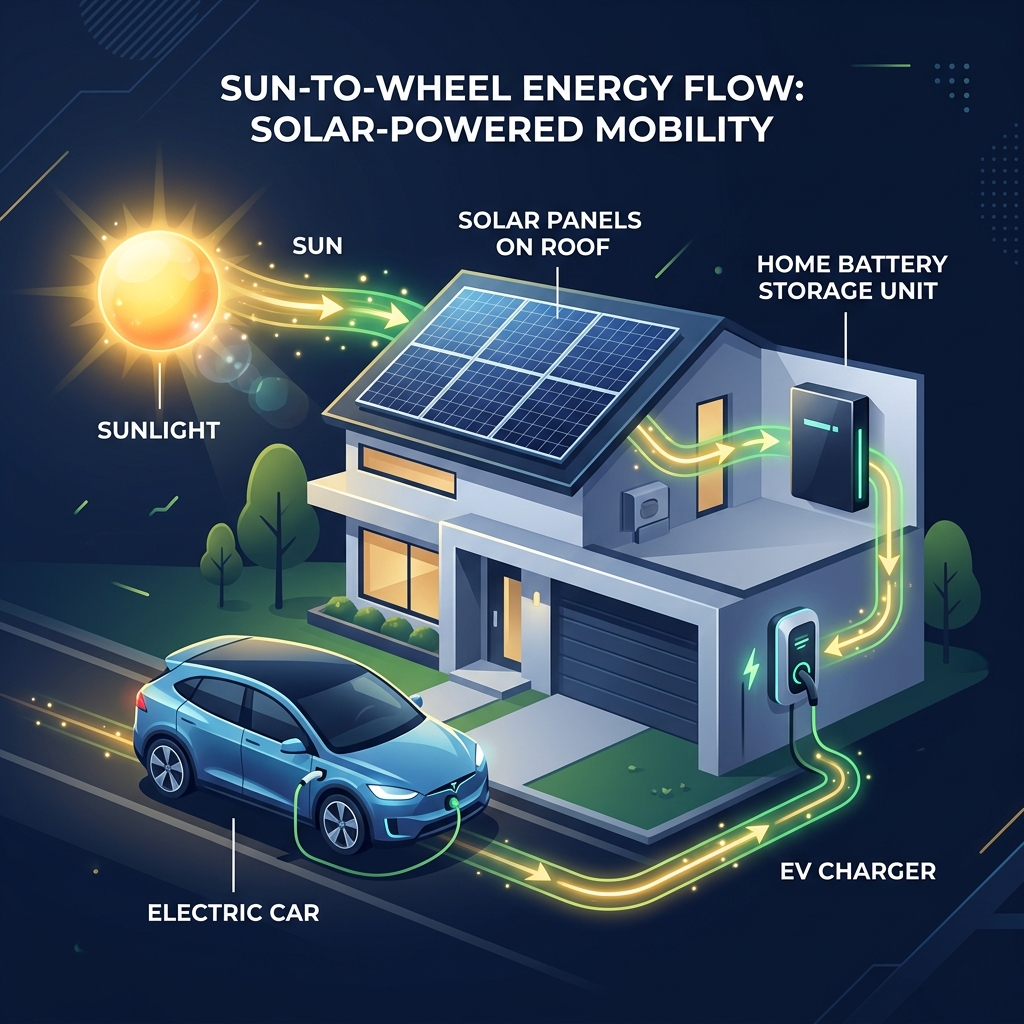
The optimal priority order for a well-configured system is:
- Solar → Home consumption first. Run your appliances on solar during the day.
- Solar surplus → Battery. Store what the home does not immediately need.
- Solar surplus → EV (if plugged in). Use any remaining surplus to charge the car.
- Battery → Home (evening). Discharge the stored solar to cover the 4pm–10pm peak.
- Grid (off-peak overnight) → EV & Battery top-up. Buy cheap overnight electricity for any remaining charge needed.
How to Size Your Bundle Correctly for the UK
Sizing mistakes are the most common reason the bundle underperforms. The key relationships to get right:
- Solar size → Battery size: Rule of thumb — install 1 kWh of battery for every 1 kWp of solar. A 4 kWp system pairs well with an 8–10 kWh battery.
- Battery size → EV usage: If you drive 30 miles/day, you need approximately 9 kWh of EV charge. A 10 kWh home battery can cover this fully if solar also contributes during the day.
- Charger speed: A 7.4 kW Zappi in Eco+ mode charges at 1.4–7.4 kW depending on solar surplus. This is ideal for most households. Only go to 22 kW three-phase if you have a three-phase supply and a large EV battery (85+ kWh).
European Variations: Germany, Spain, Netherlands
The bundle economics differ across Europe due to varying electricity prices and incentives:
- Germany: Electricity at ~€0.29–€0.34/kWh makes the battery ROI exceptional. KfW loan 270 offers 0% financing for solar + storage at up to €150,000. The Balkonkraftwerk can supplement the main system cheaply.
- Spain: Lower electricity prices (€0.12–€0.22/kWh depending on tariff) mean longer payback periods, but Spain's 300+ days of sunshine dramatically increase solar generation — offsetting this with higher yields.
- Netherlands: The net metering phase-out (2027 completion) is the single biggest driver of battery adoption. Every kWh stored instead of exported is worth the full 28 c/kWh import rate vs the ~3 c/kWh export rate.
Size Your Solar System
Start with the solar calculator below to find the right panel count and system size for your home. Then use our EV Savings Calculator to layer in your EV savings.
Quick Add Appliances
Configure Load Details
No appliances added yet
Click items in the grid above to add them to your solar estimation plan.
Battery Backup (Off-Grid / Hybrid)
Store excess solar energy for use during night-time or power outages.
Energy Consumption & Generation Overview
Daily Load Breakdown
Add appliances to view load breakdown chart.
How to Use the Solar Calculator
Follow these three steps to accurately size your solar power system for home or business use.
Calculate Total Consumption
Before purchasing solar panels, you must know your actual daily consumption in kilowatt-hours (kWh). Our solar panel calculator allows you to input exact quantities, power ratings (Watts), and daily operating hours for fans, LED lights, air conditioners, and kitchen appliances.
(Watts × Qty × Hours) ÷ 1000 = kWh per dayGrouping appliances gives your total daily and monthly utility footprint.
Recommended Solar System Size
System size in kW depends on average daily sun hours and efficiency losses. Average global locations receive between 4.0 to 6.0 peak sun hours per day. We assume a standard 5.0 peak sun hours with an 80% system efficiency factor.
Daily kWh ÷ (Peak Sun Hours × 0.8) = Solar kW SizeWe automatically round up to align with whole numbers of modern 550W modules.
Select Inverter & Batteries
Inverters convert DC solar panel power to AC home power. We apply a 20% safety headroom above the system size. For energy storage, we calculate backup requirements during night-time or power outages based on your backup hours target.
Lithium: 85% DoD • Lead-Acid: 50% DoDLead-acid batteries must align with series voltage connection multiples (4× for 48V systems).